Why are we attracted to psychological diagnosis content on social media?
media—a small space that allows us to escape, if only for a few moments, and forget what we have been through during the day. We scroll through reels, watch stories, and laugh or cry along with short videos.
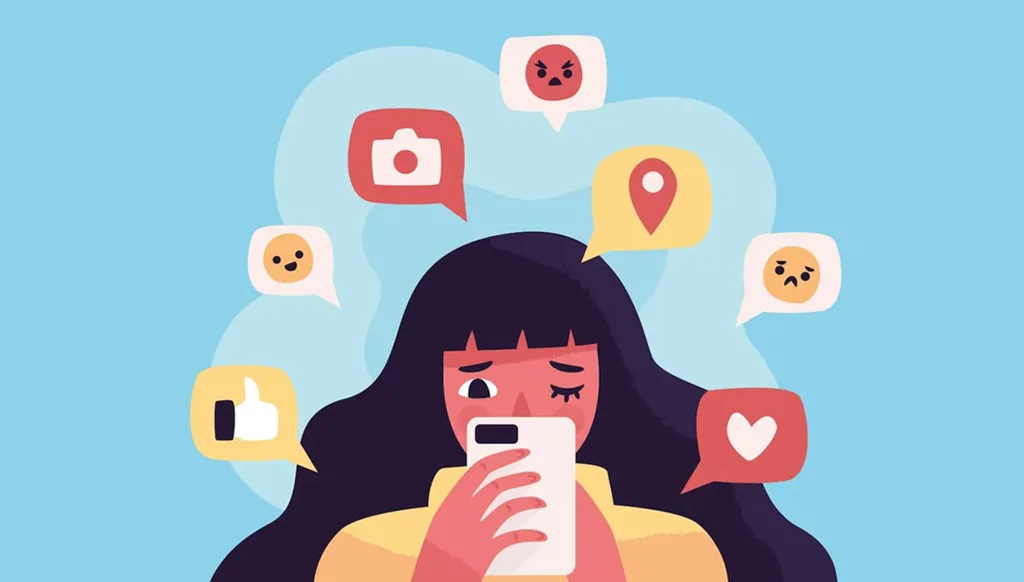
And between one video and the next, content about “psychological diagnoses” appears. Suddenly, we feel confused: Do I suffer from all these things? Can I diagnose myself today through these videos?
I have often heard friends say that they suffer from certain conditions or syndromes. When I ask them where that diagnosis came from, the answer is usually: “I diagnosed myself.” There is no denying that this type of content grabs attention and occupies the mind. I even found myself comparing experiences, digging deeper, and saving videos to revisit later.
But this raises a deeper question: Why are we so strongly attracted to this type of content? And why do we sometimes trust our own conclusions more than those of experts?
I spoke with Rawiya Aitani, a certified coach and self-relationship specialist, who explained that over the past few years, mental health has shifted from being a taboo subject to one of the most discussed topics on social media.
Short reels, emotional music, direct statements, and symptom checklists all make viewers feel as though the video is speaking directly to them. This leads to the real question: not why this content is widespread, but why we are so drawn to it.
Aitani explained that the first reason lies in the era we live in—an era of shortcuts.
Today’s world is psychologically, emotionally, and mentally exhausting, and people’s energy is limited. When someone sees a reel that presents symptoms and explanations in just 30 seconds, they feel relieved because they receive a quick answer instead of embarking on a long journey of reflection and confrontation. However, this shortcut comes at a cost: simplified awareness is often incomplete and does not reflect the true depth of the human experience.
Another factor Aitani highlighted is the effect this content has on emotions and memory. These videos trigger the feeling of “That’s me!” which encourages viewers to comment, share, and search for more. This is exactly what social media platforms want: engagement and prolonged user attention. Simplified psychological diagnoses in reels are highly effective at generating that response, but they remain superficial indicators rather than real diagnoses.
The bigger problem begins not with watching the content, but with adopting it. When a person says, “I suffer from this condition, and that’s why I am the way I am,” the diagnosis shifts from being a tool for understanding to becoming a defensive identity. Instead of asking, “What happened to me?” the wound becomes a permanent label, and awareness turns into justification rather than a path toward healing and growth.
Aitani emphasizes that diagnoses made through social media are not accurate because they fail to account for personal context, life experiences, relationship patterns, childhood history, behavioral repetition, and professional evaluation—all of which are essential components of a genuine psychological assessment.
A reel offers only a fleeting snapshot: no history, no depth, and no therapeutic responsibility. It may point something out or raise awareness, but it does not diagnose.
Still, there is a positive side. These videos help break the stigma surrounding mental health, open conversations about psychological well-being, and encourage people to acknowledge what they are feeling. The danger arises when this content is treated as absolute truth and becomes a substitute for genuine inner work. True self-awareness does not place people in boxes; it opens the door to understanding themselves and seeking healing.
We are not attracted to this content because we love diagnoses. We are drawn to it because we are searching for understanding, for explanations, for words that can describe pain we may have carried silently for a long time. But a label alone is not enough, and a reel cannot heal. Healing does not begin with a name—it begins with the courage to look beyond it, understand the wound beneath it, and pursue real change.
.